
ACNE SCAR
Introduction
Acne scars can significantly impact self-esteem and confidence, often lingering long after the acne has cleared. These scars arise when the skin heals from acne lesions, resulting in either depressed or raised marks on the surface. Understanding the different subtypes of acne scars can help in selecting the most effective treatment options.
Subtypes of Acne Scars
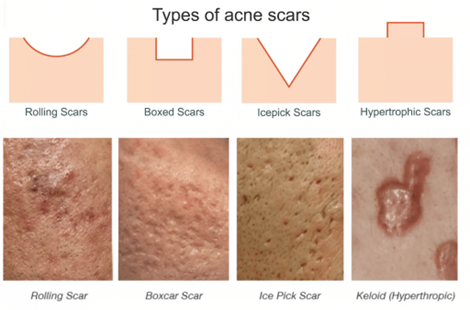
- Atrophic Scars: These are the most common type and appear as depressions or indentations in the skin. They include:
- Ice Pick Scars: Deep, narrow scars that resemble small puncture marks.
- Boxcar Scars: Wider, angular depressions with well-defined edges.
- Rolling Scars: Shallow, wavy indentations that create an uneven skin texture.
- Hypertrophic Scars: These scars are raised above the skin’s surface and are characterized by an excess of collagen during the healing process. They can be red, swollen, and may become itchy.
- Keloid Scars: Similar to hypertrophic scars, keloids are raised scars but can grow larger than the original acne lesion and extend beyond its boundaries. They are often darker and can be more challenging to treat.
Treatments
At CLG clinic, Our CLG™ Scar-Sculpt Therapy offers a variety of advanced treatments tailored to the different subtypes of acne scars. For atrophic scars, options such as radiofrequency, micro-needling, and biostimulators can help stimulate collagen production and improve skin texture.
Hypertrophic and keloid scars may benefit from treatments like corticosteroid injections, silicone gel sheets, or topical medications designed to reduce scar elevation and pigmentation.
Our experienced team is committed to customizing treatment plans to effectively address and diminish acne scars, helping you achieve a smoother, more even complexion and renewed confidence.

Book Your Appointment Now
Flexible appointments and urgent care.
Or call — 012 - 501 5933

Better Health Care is Our Mission
Same Day Appointments are Available.